How to Measure a Box Correctly: Length, Width, and Height Explained
Learn how to measure box length, width and height correctly, distinguish internal and external dimensions, and avoid common custom packaging errors.
Correct box measurements are essential for product fit, material use, quotations and shipping calculations. Using the same length, width and height order helps your packaging supplier understand the size correctly.
Box dimensions are normally written in the order Length × Width × Height (L × W × H). For example, a box measuring 30 × 20 × 10 cm has a length of 30 cm, a width of 20 cm and a height of 10 cm.
1. What Is the Length?
The length is usually the longer side of the box opening or base. Place the assembled box on a flat surface and measure the longer horizontal edge from one end to the other.
2. What Is the Width?
The width is usually the shorter side of the opening or base. It runs from front to back and is measured at a right angle to the length.
3. What Is the Height?
The height, sometimes called depth, is the vertical distance from the bottom of the box to the top. Measure it with the box fully assembled and closed in its normal position.
QUICK EXAMPLE
For a box specified as 30 × 20 × 10 cm: 30 cm is the length, 20 cm is the width and 10 cm is the height. Always include the unit—millimetres, centimetres or inches.
4. Internal vs. External Dimensions
Internal dimensions describe the usable space inside the box. These measurements are the most important when checking whether a product, bottle, tray or insert will fit.
External dimensions include the paperboard, greyboard or corrugated material thickness. They are mainly used for master carton planning, storage, pallet loading and freight calculations.
Always tell your supplier whether the size is internal or external. For rigid boxes and corrugated packaging, material thickness can create a noticeable difference between the two.
5. How to Measure Different Box Styles
Folding cartons: Assemble the carton first, then measure the usable inside length, width and height.
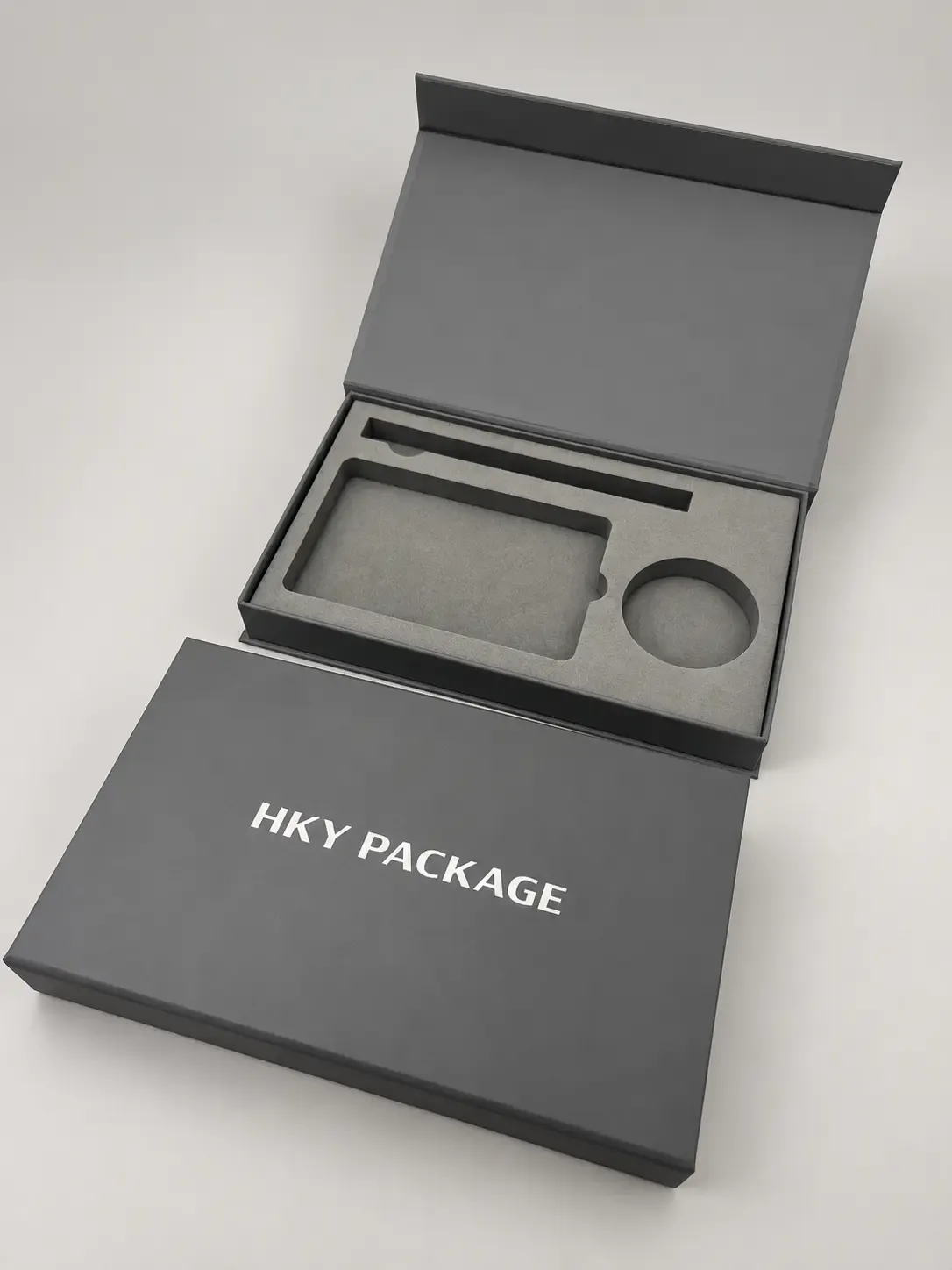
Rigid gift boxes: Measure the inside of the base box. Do not use the outer lid size as the product-fit dimension.
Mailer and corrugated boxes: Measure from inside panel to inside panel after assembly, without including flaps.
Drawer boxes: Measure the usable internal space of the sliding tray rather than the outside sleeve.
6. How to Measure Irregular-Shaped Boxes
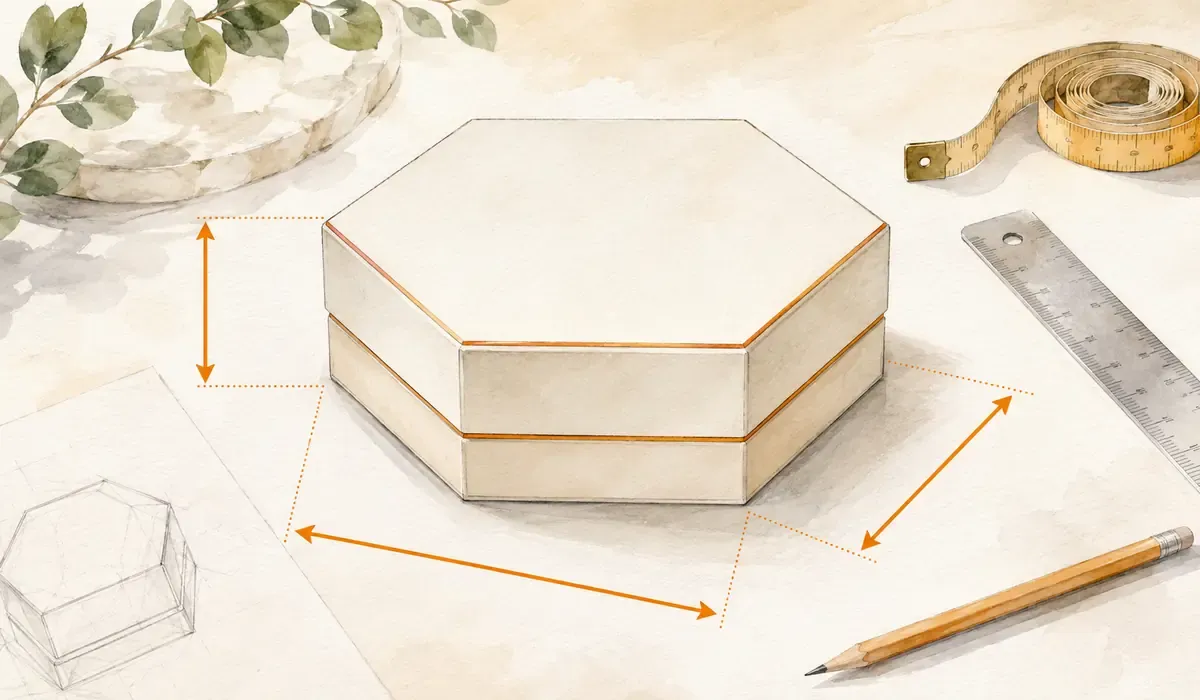
For hexagonal, heart-shaped, oval and other irregular packaging, measure the maximum overall dimensions. Length is the greatest distance from the leftmost point to the rightmost point, width is the greatest front-to-back distance, and height is measured from the lowest base point to the highest point of the closed box.
For a round box, provide the diameter and height. If the lid is wider than the base, use the lid's maximum external diameter for shipping calculations, while the internal base diameter should be used to confirm product fit.
Best practice: Send a top-view photo or labelled drawing with the product dimensions. For complex structures, HKY PACKAGE can check the measurements and prepare a suitable dieline before sampling.
7. Common Measurement Mistakes
- Changing the order of length, width and height.
- Mixing internal and external dimensions.
- Measuring the product without allowing space for an insert.
- Forgetting to state whether the unit is mm, cm or inches.
- Measuring a flat box before it has been assembled.
When the box shape is unusual, add a labelled sketch or photograph. This prevents misunderstandings and helps the structural designer prepare the correct dieline.
Send HKY PACKAGE Your Product Size
If you are unsure how to measure your packaging, send us the product dimensions, photos and required quantity. HKY PACKAGE can recommend the box size, structure and insert allowance before sampling.