When Should You Place a Packaging Order for a Product Launch?
The article gives you the definitive answer, breaking down key variables like packaging complexity, sample revisions, and shipping modes to help you set a realistic timeline.
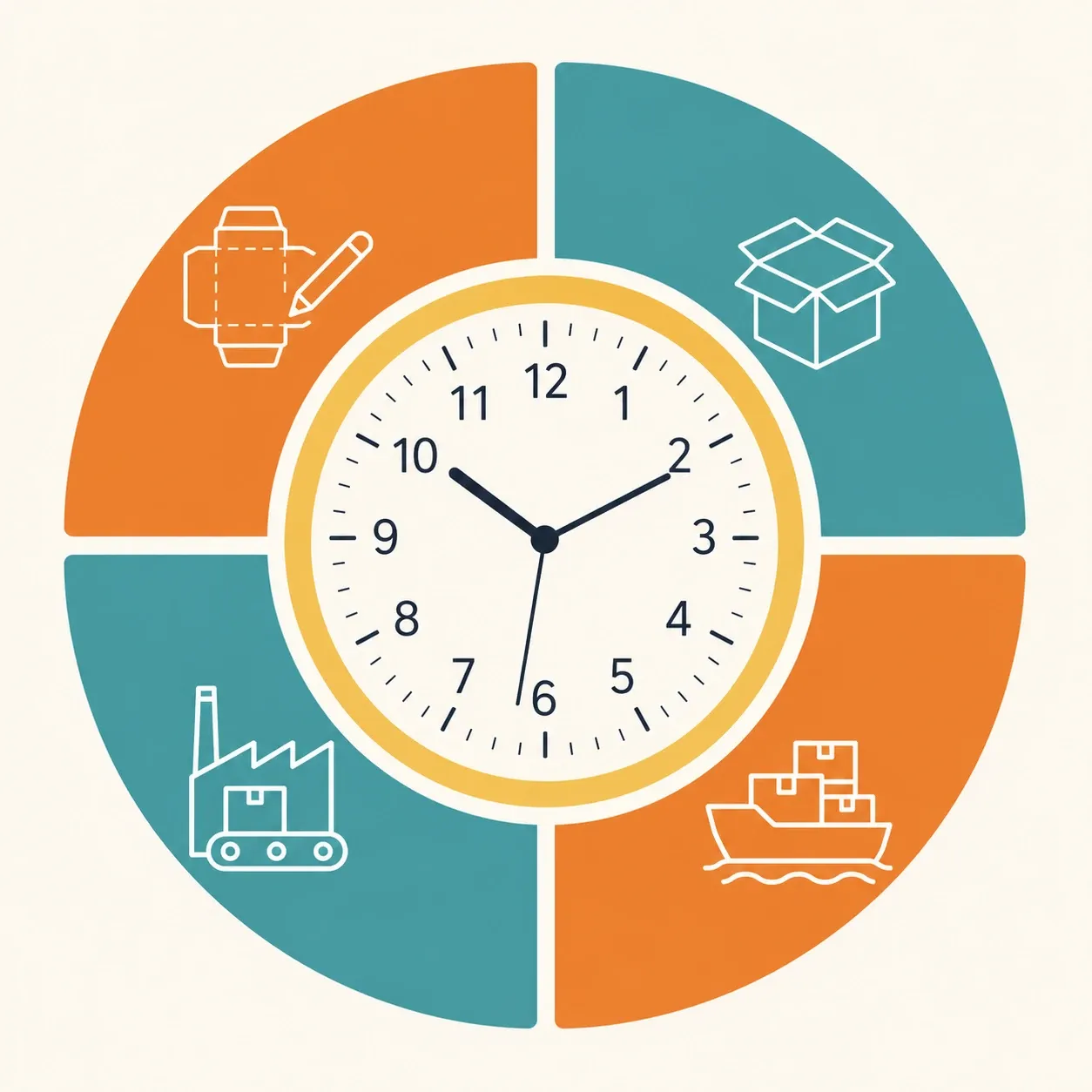
A product launch date can look comfortably far away—until the packaging sample needs one more adjustment, the selected paper is temporarily unavailable, or sea freight takes longer than expected.
Then the calendar suddenly becomes the most expensive part of the project.
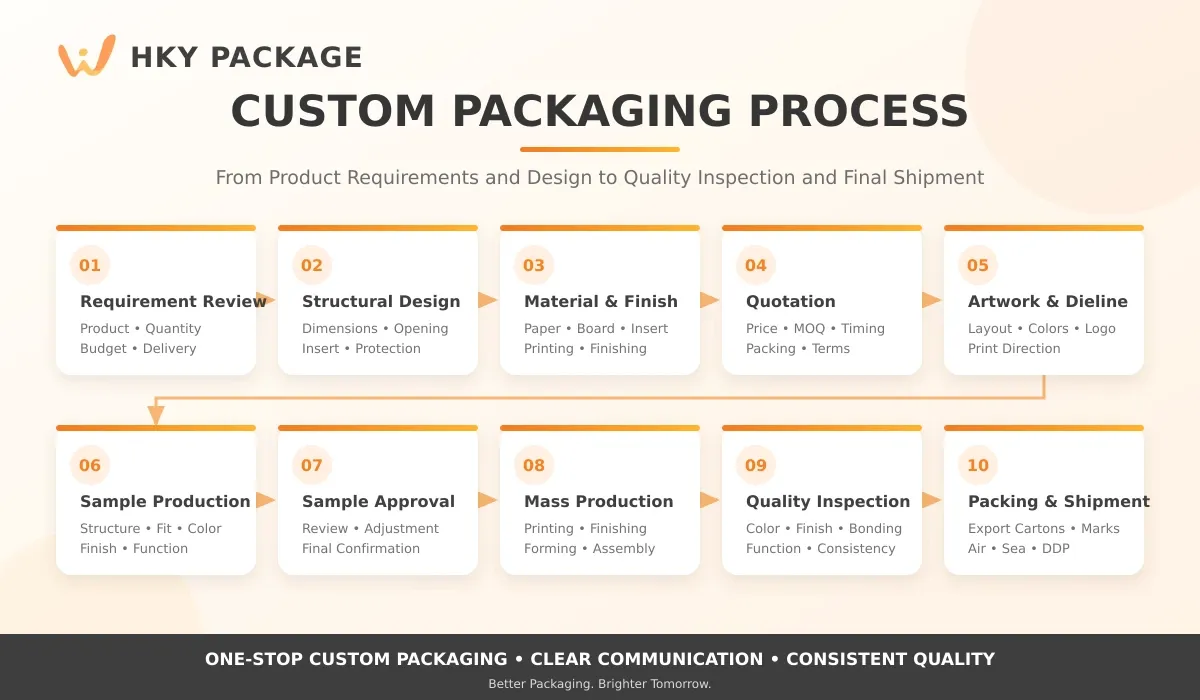
Packaging is often treated as something to order after the product is finished. In reality, custom packaging involves structural design, artwork, sampling, material preparation, printing, finishing, assembly, quality inspection and transportation. Each stage depends on the one before it.
So, when should you place your packaging order?
For most custom packaging projects, we recommend starting the process 8–12 weeks before the product launch. If the packaging is complex, uses special materials or will be shipped internationally by sea, starting 12–16 weeks in advance is safer.
Start With the Launch Date and Work Backward
Imagine that your new skincare collection launches on October 1.
The products must be photographed before the launch. Retailers need stock in advance. Influencers need samples. Your warehouse needs time to count, assemble and distribute everything.
This means the packaging should not arrive on September 30. It may need to arrive several weeks earlier.
A realistic schedule works backward from the date the finished products must reach your warehouse—not simply from the public launch date.
Before requesting a quotation, confirm four dates:
- Public product launch
- Product photography or marketing deadline
- Warehouse delivery deadline
- Latest acceptable packaging arrival date
These dates help your packaging manufacturer determine whether standard production is suitable or whether the project requires an accelerated schedule.
10–12 Weeks Before Launch: Confirm the Basic Packaging Direction
At this stage, you do not need every detail to be perfect. However, you should know what the packaging needs to accomplish.
Is the box mainly for retail display, e-commerce shipping or gifting? Does it need to protect a glass bottle, hold several products or create a premium unboxing experience? Will the packaging be assembled by your team or supplied fully assembled?
To begin a useful discussion, provide:
- Product dimensions and weight
- Estimated order quantity
- Preferred box style
- Reference photos
- Target budget
- Delivery destination
- Required arrival date
If you do not have a box structure or dieline, that is not a problem. Based on the product information, HKY PACKAGE can recommend a suitable structure, material and insert.
8–10 Weeks Before Launch: Develop the Structure and Artwork
Now the packaging begins to take shape.
The structural design must answer practical questions:
- Does the product fit securely?
- Is there enough space for the insert?
- Can the box withstand transportation?
- Is it easy to assemble?
- Is the package larger than necessary?
- Will the design increase shipping costs?
A box that looks beautiful on a screen can still fail in real use. A deep insert may hide the product. A magnetic box may become unnecessarily expensive. An oversized gift box may look impressive but increase international freight and warehouse costs.
At this stage, our team reviews appearance, protection, cost and production efficiency together. A small structural change can sometimes reduce material consumption or improve how many boxes fit into an export carton.
Once the structure is confirmed, we prepare the dieline for the artwork. Your design should then be placed on the final dieline—not on an approximate template.
6–8 Weeks Before Launch: Approve the Physical Sample
A digital rendering is useful, but it cannot fully show paper texture, foil reflection, box strength, color or how the product feels inside the insert.
That is why physical sampling matters.
Depending on the project, you may need:
- A blank sample to confirm size and structure
- A digital printed sample to check layout
- A production-quality sample to approve materials and finishes
- A fitted sample with the actual product and insert
Physical samples commonly take around 3–8 working days, although special paper, complex inserts, custom hardware or handcrafted finishes may require more time.
When checking the sample, do not only ask, “Does it look good?”
Open and close it several times. Place the product inside. Turn the box upside down. Check whether the insert moves. Look at it under different lighting. Ask someone unfamiliar with the package to open it without instructions.
4–6 Weeks Before Launch: Approve Mass Production
Mass production should begin only after the important details have been approved:
- Final dimensions and box structure
- Materials and insert
- Artwork and printing colors
- Surface finishes
- Packing method
- Shipping marks
Many standard packaging projects take approximately 10–20 working days after approval. Complex rigid boxes, handmade structures, special papers and multi-part inserts may take longer.
This is also where late artwork changes become dangerous.
Before approving production, check barcodes, ingredients, legal statements, spelling, colors and product names carefully. Your packaging manufacturer can inspect technical printing details, but the brand remains responsible for approving the final content.
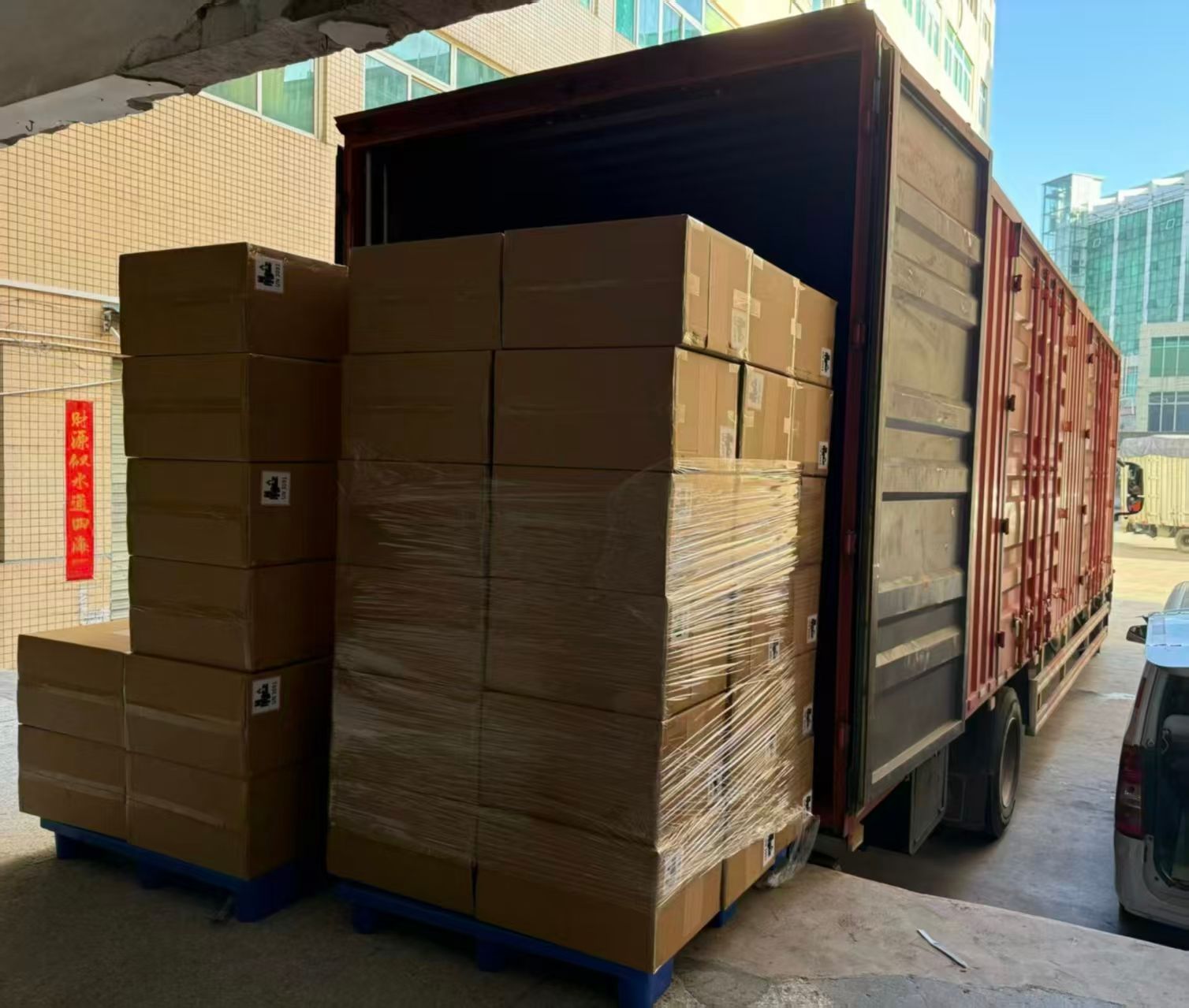
Do Not Forget Shipping Time
A packaging project is not complete when the boxes leave the factory. It is complete when they arrive where you need them.
- Express courier for samples and very small urgent shipments
- Air freight for faster commercial delivery
- Sea freight for larger and more cost-effective orders
- Combined shipping when part of the order is urgently required
International transport time varies by country, season, customs clearance and delivery method. Sea freight can require several additional weeks, while air freight is faster but more expensive.
A Practical Option: Split the Shipment
A small quantity can be sent by air for photography, influencer kits or the first launch orders, while the remaining quantity travels by sea. This can protect the launch date without sending the entire order by an expensive method.
What If You Only Have Four Weeks?
First, do not panic—but do not pretend it is a normal schedule.
An urgent packaging project may still be possible if:
- The structure is relatively standard
- Materials are readily available
- Artwork is complete
- Decision-makers respond quickly
- The quantity fits the available production capacity
- The delivery method is flexible
The fastest solution is not always to make the factory work overnight. It may be to simplify the box.
Replacing a complicated handmade structure with a proven rigid box, reducing the number of finishes, using an available specialty paper or selecting a standard insert material may save valuable time.
At HKY PACKAGE, urgent projects are evaluated individually. We first check material availability, production capacity and shipping time before confirming a delivery plan. A realistic schedule is more valuable than a fast promise that cannot be kept.
Common Scheduling Mistakes That Delay a Launch
01. Waiting for the Product to Be Completely Finished
Packaging development can often begin with accurate dimensions, drawings or prototypes. Waiting until every product detail is complete may remove valuable time from sampling and testing.
02. Treating the First Sample as the Final Sample
Even a well-prepared project may need one adjustment. Leave room in the schedule for review rather than assuming immediate approval.
03. Confirming the Box Before Confirming the Insert
The product, insert and outer box must be developed as one system. Changing the insert later may affect the internal dimensions and overall structure.
04. Forgetting Peak Production Seasons
Factories, material suppliers and shipping services become busier before major holidays and seasonal retail periods. Projects scheduled between September and November, or before Chinese New Year, should allow additional time.
05. Choosing Sea Freight Too Late
Sea freight saves money, but only when the schedule allows it. A delayed order may force the buyer to use air freight, turning a preventable scheduling problem into a major cost increase.
A Practical Packaging Timeline
For a standard international project, a safer schedule may look like this:
This is a planning example rather than a fixed promise. Simple projects may move faster, while complex packaging or sea freight routes may require more time.
Earlier Planning Does Not Mean Earlier Payment
Some buyers delay contacting a packaging manufacturer because they are not ready to place an order.
However, beginning the discussion early does not mean production must start immediately.
Early planning gives you time to compare structures, calculate shipping volume, test inserts, adjust artwork and understand the real cost before committing to mass production. It replaces rushed decisions with informed ones.
That is especially useful for new products, limited editions and trial orders, where the sales volume may still be uncertain.
The Best Time to Start Is Before Packaging Becomes Urgent
For most product launches, contact your packaging supplier 8–12 weeks in advance. Start 12–16 weeks ahead if the project includes complex structures, special materials, strict color requirements or international sea freight.
If your launch is already closer, share the real deadline immediately. A capable manufacturer can then separate what is essential from what can be simplified.
HKY PACKAGE provides support from structural design and sampling to mass production, quality inspection and international shipping. Whether you are preparing 500 trial boxes or a larger repeat order, early communication helps us recommend a solution that balances appearance, protection, cost and delivery time.
Planning a Product Launch?
Send HKY PACKAGE your product dimensions, estimated quantity, reference images, delivery destination and required arrival date.
The launch date should create excitement—not a race to find missing boxes.